Description
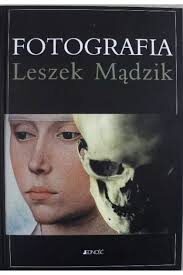
Livro amplamente ilustrado, com fotografias do renomado diretor teatral polonês do Grupo de Teatro Scena Plastyczna (teatro visual e marionetes), autor do livro, tiradas em meio a suas turnês teatrais por diferentes países. O livro tem prefácio do diretor cinematográfico Ansrzej Wajda. “European theatre originated from from literary tradition, words are the most important clement. This is true of the times of Sophocles, of Shakespeare and of Chekov. Today it is not so obvious at all. / When I was filming “Dead Class" in 1976, I remember Tadeusz Kantor telling me that he was fed up with from the dialogues taken from Witkacy and he would write what was necessary himself. / And he did it. It was a consequence of his theatre being a protest aganst what was happening in other theatres at that time. / I am writing this not only to make the readers of this book realize, but also to realize myself, what a difficult road it was, and how different from a typical conception of theatre, that led to Leszek Madzik's “Scena Plastyczna" Theatre which renounced not only words, but also a language of gestures used in pantomime theatre. It also renounced dramaturgy based on the characters and the anecdotes of theatre. / HERBARIUM, MOISTURE, WANDERING, FIBRES / These are not subjects for the theatre. They include neither action nor events that can bring to life theatrical characters. So where do the power, beauty and originality of Leszek Mądzık’s theatre come from? / I am frequently asked the following question. Since I amn in a position to make films which will survive years and years, why do I work for theatre, where creations disappear as soon as a performance leaves the stage? My answer is always the same. The most beautiful thing in the theatre is that a performance dies along with its spectator. It is a natural process, just like real life, whereas in the cinema, a director leaves behind too much rubbish, lyng uselessly on the shelves of film stores and archives. / From the very beginning, when work for a new performance starts, Leszek Mądzik's theatre is already under the shadow of death. And. most beautiful of all, this sense of death penetrates everything. Looking at these phenomenal images and taking part in these extraordinary spectacles, we experience mortality as intensely as we do precisely because we know that this theatre lives just as long as we live”. Andrzej Wajda. / “The time has come to preserve moments that currently only exist in memory. Transitory moments which exist as though out of context, personal memories, themes I am working on and contemplating. They create their own light, and I photograph them capturing that light. I take photographs during my theatre tours. There is always time to take them. I find landscapes, figures, objects in various curious places in the world. Preserving their trace is not an essential part of building my performances, but it is something I need, more in an intuitive than in a concrete way. I often cannot find a rational explanation for taking one picture but not another. It is a very great and intimate joy that I discover in the little lens”. Leszek Mądzik.


Comments
Doação de Ana Maria Amaral.